The rapid adoption of generative AI has transformed software development, enabling companies to launch products in weeks rather than months. Yet as AI applications become increasingly common, many developers are confronting a problem that technology alone cannot solve: how to build profitable businesses around products that are expensive to operate and difficult to monetize.
Velocity is betting that this challenge will define the next phase of the AI market.
The startup has announced $27 million in seed funding, led by NFX and Red Dot Capital Partners, with participation from Stardom Ventures, Corner Ventures, and Transcend. Rather than competing in the crowded field of AI applications, the company is building infrastructure designed to help those applications generate revenue and expand their reach.
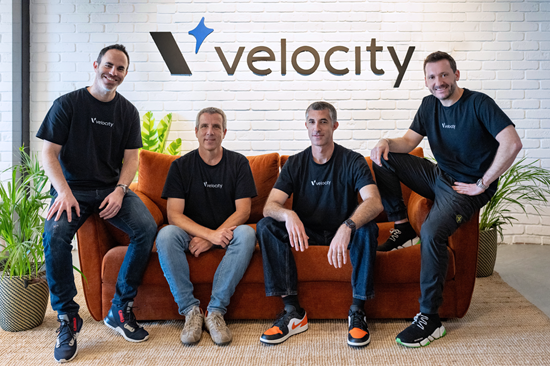
The company was founded by Tal Shoham, Amir Shaked, and Nimrod Zuta, former executives at ironSource and Unity who previously spent years building advertising, monetization, and growth technologies used by software developers worldwide.
As AI Scales, Revenue Models Face New Pressure
Generative AI has dramatically lowered the cost and complexity of creating software. Consumer applications, coding assistants, AI search experiences, and specialized enterprise tools have all benefited from the technology’s rapid evolution.
What has become less straightforward is the economics behind those products.
Although AI applications often attract substantial numbers of users, only a small percentage ultimately subscribe to paid plans. Meanwhile, inference costs continue to increase as users demand more advanced capabilities and richer outputs.
To offset those expenses, many companies have introduced prompt limits, feature restrictions, and subscription barriers that appear early in the user experience.
Velocity believes that approach may reduce opportunities for users to discover the full value of AI products before being asked to pay.
Instead, the company is developing technology that allows applications to supplement subscription revenue with native advertising, making it possible to offer more free usage while creating an additional source of income.
Designing Advertising for Conversational AI
Velocity’s platform is built around the idea that AI changes not only how people use software, but also how monetization should work.
Rather than relying on browsing history or cookie-based tracking, the company focuses on real-time user intent expressed naturally during AI conversations. According to Velocity, those interactions provide immediate context about what users are trying to accomplish, making recommendations more relevant.
Its platform combines three technologies: an AI-native advertising network for intent-based placements, a mediation and auction layer designed to maximize revenue across demand sources, and a conversation intelligence layer that converts dialogue into structured, privacy-safe intent signals.
Tal Shoham, CEO and co-founder of Velocity, believes AI is creating a new category of infrastructure.
“AI is becoming the dominant interface for software, creating entirely new opportunities around monetization and distribution,” Shoham said. “We believe the biggest opportunity of the AI era will not only be building products, but also monetizing and distributing them. We’re building the infrastructure layer that helps solve both.”
Shoham also emphasized that monetization should complement the user experience rather than compete with it.
“AI monetization should feel native to the experience,” he said. “Users expect AI interactions to be useful, contextual, and trustworthy. Our goal is monetization, recommendations, and product discovery that enhance the experience rather than interrupt it.”
Customer Adoption Begins to Take Shape
Velocity says early deployments have demonstrated that AI-native applications can introduce monetization while maintaining user engagement and retention.
Leadtech / MAU is among the companies working with the startup. Diego Díaz, CEO of the Subscription Division at Leadtech / MAU, said Velocity has proven to be “responsive, collaborative, and moves quickly,” adding that the company has been impressed by both the technology and the team supporting it.
The startup also pointed to its partnership with AIBY’s Chaton application.
Artsiom Turavets, Lead Product Manager at AIBY (Chaton), said the platform has delivered “strong performance while maintaining a high-quality user experience.” He added that the company has experienced “meaningful monetization outcomes alongside healthy engagement and retention metrics” while benefiting from Velocity’s collaborative approach and tailored solutions.
Investors See AI Creating Another Infrastructure Cycle
The funding reflects investor confidence that AI will require supporting technologies beyond foundation models and applications themselves.
Gigi Levy-Weiss, General Partner at NFX, said each major technology shift has historically produced new infrastructure companies. He believes AI-native software is creating one of the largest technology platforms to date and said Velocity is building “the growth infrastructure layer that enables that intent to drive monetization, distribution, and growth.”
At Red Dot Capital Partners, Partner Atad Peled also sees user intent emerging as a defining characteristic of AI-native applications. He said Velocity’s experienced leadership team and product vision position the company to help establish this new category.
For the founders, the long-term vision reaches beyond advertising technology. Velocity argues that just as keywords became central to search engines and identity shaped social platforms, intent will become the defining signal for AI software.
“Every major platform has been built around a dominant signal,” Shoham said. “We believe the AI era will be built around intent, and we’re building the growth infrastructure layer to monetize and distribute through it.”