At Aarion Capital, Founder and Chief Investment Officer Aarush Garg is focused on building the research, technology, risk controls, and team he believes should come before significant scale.
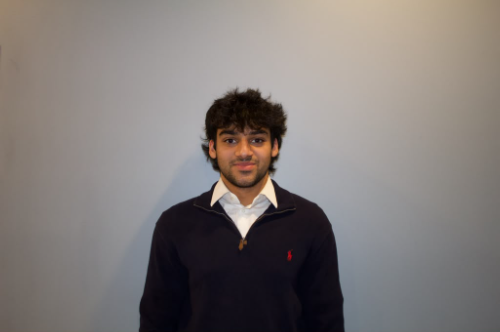
For Aarush Garg, building an investment firm has increasingly become less about identifying the next trade and more about creating an organization capable of making better decisions repeatedly.
As Founder and Chief Investment Officer of Aarion Capital LP, Garg has spent much of the past year developing the systems surrounding the firm’s investment strategy: research processes, portfolio controls, internal technology, documentation, investor reporting, and a growing specialized team.
It represents an evolution from the way his career in markets began.
Garg first became interested in investing as a teenager, initially attracted by the speed and volatility of financial markets. One early SPY options trade, which moved from a loss for much of the day to roughly a 40% gain near the close, left a lasting impression on him. Markets soon became an intense personal interest.
But experience also exposed him to the other side of volatility.
Early mistakes included emotional trading, oversized positions, excessive exposure, inadequate hedging, and holding losing positions for too long. An event-driven position tied to an Astra rocket launch became another formative lesson after the launch failed, the trade moved sharply against him, and liquidity deteriorated.
Those experiences gradually shifted Garg’s attention away from simply asking whether an investment idea could make money.
He became increasingly interested in understanding why a decision worked, why another failed, and whether the reasoning behind those decisions could be documented and repeated.
“I started out enjoying the thrill of investing in highly volatile assets, but over time I became much more interested in understanding why certain decisions worked and others did not,” Garg says.
He began building datasets around his own trading history and learning from mentors with prior professional experience at financial institutions including Schwab and Morgan Stanley, alongside independent advisors who broadened his exposure to markets and financial technology.
That process ultimately contributed to the philosophy now shaping Aarion Capital.
Building Before Scaling
Founded in August 2025 and operational since January 2026, Aarion Capital is headquartered at The Spiral in Hudson Yards, New York City. The multi-asset investment firm operates across liquid equities, fixed income, commodities, options, and derivatives, using global macro and event-driven thinking to evaluate market dislocations.
As the firm has grown, Garg says the size of Aarion is not what occupies most of his attention.
His focus is on whether the organization supporting that capital can develop alongside it.
“I would rather build the research, controls, documentation, technology, and operational foundation early and allow the firm to scale on top of it,” he says. “When other people trust you with their capital, I believe the infrastructure should develop alongside—or even ahead of—the growth.”
That philosophy can be seen in what Garg describes as Aarion’s “intellectual infrastructure.”
The firm maintains strategy logs, internal research, records surrounding investment decisions, and documentation intended to help the team revisit not only what happened but the reasoning behind it.
The objective is to create institutional memory.
Instead of treating each successful or unsuccessful decision as an isolated event, Garg wants the firm to be able to examine historical decisions, understand what changed, and continually refine its process.
For him, accountability becomes especially important as a firm grows.
The investment process therefore extends beyond idea generation. Aarion establishes position-sizing limits and broader portfolio risk parameters before capital is deployed. Research incorporates macroeconomic developments, news, company-specific catalysts, sectors, holdings, and internal analysis.
Final portfolio authority remains with Garg as CIO, but the thinking that reaches him is increasingly collaborative.
Technology as Decision Support
Another component of that infrastructure is VAL — Volatility Analytics and Logistics, Aarion Capital’s internally developed research and analytical system.
VAL is designed to bring together market conditions, portfolio exposures, sector information, catalysts, upcoming events, security research, internal reports, and team analysis.
The intention is not to automate responsibility.
Garg is deliberate about drawing that distinction.
Human judgment remains at the center of Aarion’s investment process, and VAL functions as decision support rather than an autonomous portfolio manager.
Garg believes artificial intelligence can be particularly useful when it helps professionals process large amounts of information, organize research, analyze portfolios, map catalysts, and evaluate potential scenarios.
What he rejects is the idea that technology eliminates uncertainty.
“AI is useful when it directly helps you make better-informed decisions,” Garg says.
Models can be incomplete. Assumptions can be wrong. Markets can behave differently from historical precedent. For that reason, Garg believes responsibility for investor capital should ultimately remain with people.
That perspective reflects a larger principle inside Aarion: technology should strengthen a process, not become a substitute for one.
From Founder-Led to Team-Driven
Perhaps the biggest change inside Aarion has been Garg’s approach to leadership.
In the early stages of the firm, he believed accountability meant controlling almost everything himself.
Eventually, he realized the opposite could be true.
“One of my biggest leadership mistakes was believing that taking accountability meant I needed to control too much myself,” he says. “Over time, I realized that being accountable for an organization also means knowing when to let go and delegate responsibility to people you trust.”
That shift is becoming increasingly visible throughout the company.
Aarion has expanded its team across research, portfolio construction, macro analysis, investor relations, international relationships, and operations.
That growing structure includes team members focused on macroeconomic analysis, sector and company research, portfolio modeling and construction, investor relations, and international relationship development.
Research and investment ideas no longer need to begin with Garg. Team members are encouraged to originate research, question existing positions, analyze companies and sectors, monitor macroeconomic developments, and contribute portfolio-construction ideas.
Garg retains final investment authority, but he does not want Aarion’s future to depend on one individual generating every idea.
It is an important distinction for a founder who wants to build an institution rather than simply a personal investment vehicle.
When evaluating people, Garg says technical ability is only part of the equation.
He emphasizes loyalty, honesty, accountability, ambition, ethics, and the willingness to take responsibility when things become difficult.
Skills can develop, he argues. Character is harder to teach.
The result is a leadership philosophy increasingly focused on giving capable people more room to operate while maintaining clear accountability for the final outcome.
The Responsibility Behind the Portfolio
Garg’s typical day illustrates how far his responsibilities now extend beyond markets.
He generally starts around 5:30 a.m. with the gym before heading into Aarion’s office at The Spiral. The workday begins with market research and outlooks from the team, portfolio review, investment discussions, and potential positioning decisions.
From there, his attention moves constantly between investing and operating the company.
There are investor meetings, team coordination, hiring decisions, organizational planning, portfolio monitoring, business development, and operational matters. A normal office day can continue until around 7 p.m., with dinners, events, calls, and meetings extending beyond that.
Garg says one of the biggest surprises of becoming a founder has been recognizing how much responsibility exists outside the investment portfolio.
There are compliance questions, operational issues, banking matters, hiring decisions, and problems investors may never see.
There is also responsibility for employees.
Being able to employ people, help them grow professionally, and know that their work at Aarion contributes to their own lives and families has changed Garg’s definition of what building a company means.
His definition of success has changed with it.
“Success means seeing my people win,” he says. “If the people around me are growing and succeeding, I feel like I am winning too.”
Letting the Process Answer the Skepticism
Garg has also had to navigate a challenge that is more personal: his age.
Being younger than many people in investment management has sometimes produced skepticism from prospective investors, business contacts, and others encountering the firm for the first time.
He has learned not to spend excessive energy arguing against it.
Instead, his preferred response is to keep building.
“I would rather be evaluated on the quality of my decisions, professionalism, process, and what we build over time than on my age,” Garg says.
It is also why he believes younger entrepreneurs should pay more attention to professionalism and presentation.
Having a strong idea is not enough, he argues. Founders must communicate what they are building in a way that investors, employees, partners, and other stakeholders can understand.
At the same time, he believes established institutions can make the opposite mistake: allowing someone’s age or unconventional style to overshadow the amount of research, preparation, and structure behind the organization.
For Garg, the answer to both problems is the same.
Build something substantive enough that the process becomes harder to dismiss.
The Next Stage of Aarion Capital
Aarion Capital is now preparing for its next phase of development.
The firm is focused on expanding investor and business relationships, further developing VAL, strengthening its research and operational processes, and gradually giving its team greater responsibility.
International relationships are also becoming a longer-term part of the picture. Aarion maintains developing relationships across regions including France, Switzerland, the Middle East, and Asia, while New York remains its home base.
Garg’s ambition is ultimately to build Aarion into a significantly larger, globally recognized investment organization.
Yet he does not want expansion merely for the appearance of expansion.
New markets, additional relationships, future offices, and a larger organization are intended to follow the underlying infrastructure rather than outrun it.
That philosophy brings Garg back to one of the lessons that transformed him from a teenager fascinated by volatility into the founder of an investment firm:
Not every opportunity needs to be taken.
“The best investment decision is sometimes the one you don’t take,” he says.
The same restraint now influences how he approaches the company itself.
For Garg, Aarion Capital’s next chapter is not simply about becoming larger.
It is about building an organization capable of handling what larger eventually requires.
To learn more about Aarion Capital and its work, visit aarioncapital.com.