Most biotech founders know they need an advisory board. Far fewer know how to build one that actually does anything. The difference between a functional advisory board and a ceremonial one — a list of impressive names on a pitch deck that rarely convene and rarely contribute — is a distinction that separates well-resourced startups from those that stall at the wrong moment.
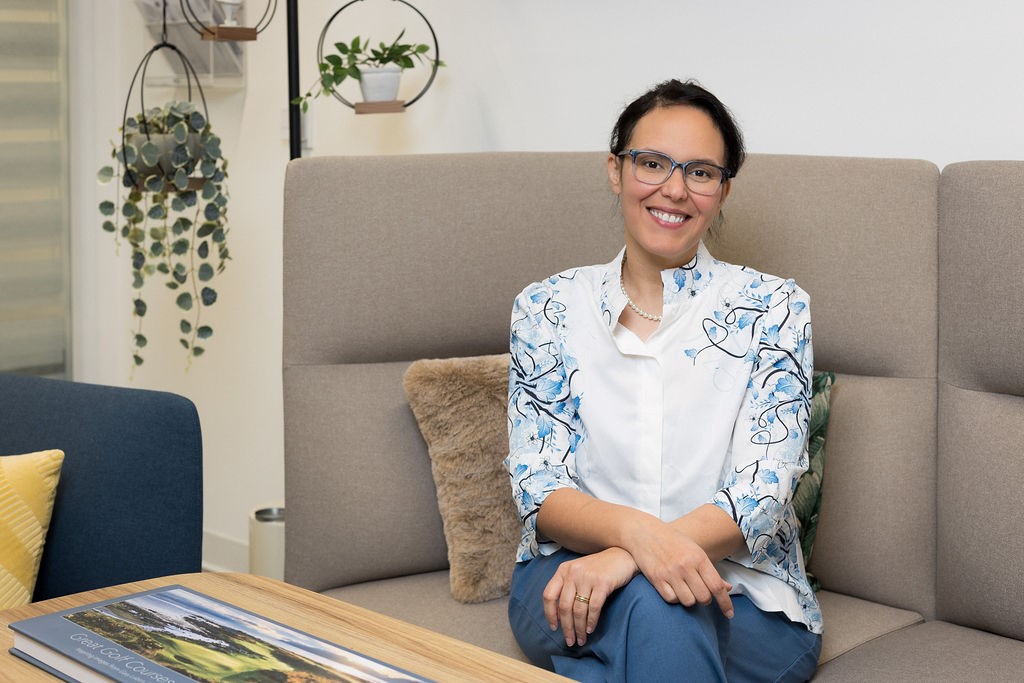
Leen Kawas has seen both versions up close. As Managing General Partner of Propel Bio Partners, a Los Angeles-based venture capital firm focused on life sciences startups, she evaluates early-stage companies and advises their founders on the structural decisions that tend to determine whether a promising therapeutic program makes it through clinical development or doesn’t. Advisory board construction, in her view, is one of those decisions — and it is almost always underestimated.
“Building an advisory board very early on is very important,” she has said plainly. The emphasis on timing is not incidental. The most common mistake founders make is treating advisory board formation as something to address once the company has already hit a wall. By then, the relationships that would have been most useful haven’t been cultivated, and the ask becomes transactional rather than relational.
Why Scientists Struggle to Build These Structures
The challenge begins with the professional culture that produces most biotech founders. Scientific training is, by design, inward-facing. Years of graduate work and postdoctoral research reward depth over breadth, independent thinking over coalition-building, and publication over persuasion. When researchers make the move into entrepreneurship, they carry those instincts with them — and the instincts don’t always serve them well.
“One thing about scientists,” Kawas has observed, “if a scientist is willing to take the leap and start a company, whether they want to be the CEO or have another role in the company, one big component in a successful business is networking and meeting people.” The word “component” understates it. In drug development, where a single program can take a decade and require regulatory expertise, clinical operations experience, manufacturing knowledge, and investor relationships simultaneously, the breadth of a founder’s network is often more consequential than the strength of the underlying science.
Kawas’s prescription is deliberate: become a “self-made extrovert.” Find the conferences, the industry events, the forums where relevant people gather, and show up consistently enough to build genuine relationships rather than collecting business cards. This is unglamorous advice, but it is grounded in how advisory relationships actually form — through repeated exposure, demonstrated seriousness, and mutual trust built over time, not through a single cold email asking someone to join your board.
Reframing the Investor Relationship
One of the more counterintuitive pieces of guidance Leen Kawas offers to founders concerns how to approach investors who decline to invest. Most founders treat a “no” as a dead end. Kawas argues it is often an opening.
“Remember that investors have the luxury of being exposed to so many ideas and companies,” she has explained. “So they build experience by proxy, and they have a very healthy network.” An investor who has seen fifty oncology companies pitch in the last three years carries pattern recognition that no individual founder can replicate. That knowledge doesn’t disappear when they pass on a deal.
Her advice: “I would even go and talk to investors with the mindset of asking for advice first, with the ultimate potential of convincing them to invest in your business.” The advice-first posture accomplishes several things at once. It creates a more honest conversation than a formal pitch. It gives the founder access to the investor’s accumulated perspective on the therapeutic area. And it plants a seed — investors who have offered guidance tend to follow the company’s progress with more attention than those who simply received and declined a pitch.
At minimum, Kawas suggests, if an investor meeting doesn’t yield capital or an obvious next step, ask for an introduction to someone who might be more relevant. The worst outcome is a “no” to that request too — the same outcome you already had. The upside is access to a network that took the investor years to build.
What a Functional Advisory Board Actually Provides
The practical value of a well-assembled advisory board in biotech is not primarily ceremonial. It is access to expertise that would be prohibitively expensive to hire full-time, delivered at a stage when the company cannot yet afford to hire it at all.
A single drug development program may require input from a regulatory strategist who has navigated the FDA’s approval process in the relevant therapeutic area, a clinical investigator with patient population access, a manufacturing expert who understands scale-up requirements, and a commercialization specialist who can stress-test the market assumptions embedded in the company’s financial projections. None of these people can be hired as full-time employees at the seed stage. But they can be cultivated as advisors — if the founder has built the relationships to ask.
Kawas emphasizes that networking in biotech should never be siloed around a single objective. “There’s this misconception that you need to really focus on networking with investors with the sole goal of raising capital,” she has said. “But you network to expand your team, to find specialized talent that can help you with the next, more complex steps of your business.” Advisory board members are, in practice, one of the primary mechanisms through which that specialized talent enters the company’s orbit.
Beyond expertise, advisory relationships serve as network multipliers. A credible scientific advisor in a given disease area carries relationships with key opinion leaders, academic collaborators, and clinical sites that would take a first-time founder years to develop independently. An industry veteran with commercial experience brings knowledge of the payer landscape, of how comparable products have been positioned, and of which partners might be worth approaching for a co-development or licensing conversation. These connections don’t appear on the org chart, but they often determine whether a company can recruit patients into a trial, attract a pharmaceutical partner, or close a follow-on funding round.
The Mindset Kawas Looks For — in Advisors and Founders Alike
When Kawas describes what she looks for in team members, the same qualities apply to the advisory relationships she encourages founders to seek out. The central criterion is mindset. “I look for the mindset,” she has said. “Regardless of an individual’s career stage, they should always embrace the idea of growth.”
Specifically, she favors what she calls a “beginner’s mindset” — the capacity to approach each problem on its own terms rather than defaulting to whatever solution worked in a prior context. “They approach each problem individually, and don’t use the mindset that led to the problem to solve the problem,” she has explained. In an industry as complex and variable as biotechnology, where the regulatory landscape shifts, patient populations differ across therapeutic areas, and each drug development program carries its own idiosyncratic challenges, this flexibility is not optional.
The implication for advisory board construction is that credential-chasing — assembling a roster of famous names in a given field regardless of their current engagement or intellectual curiosity — is a poor substitute for identifying advisors who are genuinely interested in the company’s specific problem and willing to think about it freshly. A retired pharmaceutical executive who joined every advisory board available in the last five years may be less valuable than a mid-career clinical investigator who is actively engaged in the relevant patient population and eager to contribute to something novel.
How Propel Bio Applies This Logic
Propel Bio Partners, which Leen Kawas co-founded alongside investor Richard Kayne in 2022, is structured around the premise that capital alone is insufficient for the companies it backs. The firm’s model extends to operational guidance, network facilitation, and the kind of hands-on support that helps early-stage companies navigate decisions that don’t appear in textbooks.
Portfolio companies like Inherent Biosciences, which is developing epigenetic diagnostics for male reproductive health, and Persephone Biosciences, whose microbiome research involves the largest infant gut health study ever conducted, each operate in areas where conventional wisdom offers limited guidance. The questions those companies face — about clinical design, patient recruitment, regulatory strategy, and market positioning — require exactly the kind of situated expertise that advisory relationships are meant to provide.
Kawas has described her broader ambition in terms that go beyond individual company outcomes. “I want to invest in companies that are building technologies that can help human health. I would love it to be accessible globally.” The connective tissue between that aspiration and its execution runs through the networks that companies build — the advisors, partners, and collaborators who extend the reach of a small team working on a large problem.
The practical takeaway is straightforward, even if the execution requires patience. Start building advisory relationships before you need them. Approach investors as potential mentors, not just capital sources. Seek out advisors with genuine intellectual engagement in your specific problem, not just recognizable credentials. And treat every conversation — including the ones that don’t end in a check or a formal commitment — as an opportunity to expand the network your company will eventually depend on.
That is, in essence, the philosophy that Leen Kawas has both practiced and preached across her career. The advisory boards that actually accelerate biotech startups are not assembled in a single recruiting push. They are cultivated, one relationship at a time, long before the moment when they become indispensable.