Gold prices do not remain at the same level forever. When they fall, the immediate concern for an existing gold loan borrower is usually whether the loan amount will change or whether additional repayment will be required. In most cases, the outstanding principal does not change simply because the value of gold has declined. However, a fall in the value of pledged jewellery can affect the borrowing cushion available against it.
This becomes particularly relevant when you are considering a top-up. Gold loan eligibility is linked not only to the quantity of gold pledged but also to its assessed value, purity, weight and the lender’s applicable lending norms. A lower valuation can therefore reduce the amount available for additional borrowing. Let’s understand everything in detail.
What Happens to Your Existing Gold Loan When Gold Prices Fall?
Suppose you pledged jewellery that was assessed at ₹6 lakh when the loan was sanctioned, and your outstanding loan is ₹3 lakh. If the assessed value of the same gold later falls to ₹5 lakh, your existing debt does not automatically increase to compensate for the decline.
What changes is the relationship between your outstanding loan and the value of the pledged collateral. This relationship is generally measured by the Loan-to-Value or LTV ratio.
The formula is straightforward:
LTV = Outstanding Loan Amount ÷ Assessed Value of Gold × 100
In the above example, the LTV would move from 50% when the gold was valued at ₹6 lakh to 60% when its value falls to ₹5 lakh. If the LTV breaches the safety thresholds, the lender may ask you to deposit extra gold or make a partial cash repayment.
Why a Fall in Gold Prices Can Affect Your Top-Up
A top-up is essentially additional borrowing against collateral that has already been pledged. Before approving it, a lender will assess whether the current value of that collateral provides sufficient cover for both the existing outstanding amount and the proposed additional loan.
Consider this simplified example. The loan amounts here fall within the ₹2.5 lakh to ₹5 lakh band, so the applicable cap is 80%:
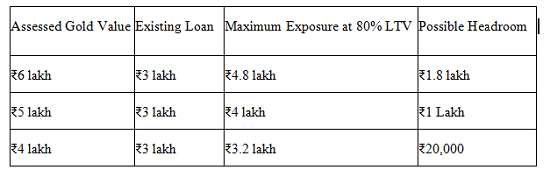
The example shows why falling prices can matter even when your loan balance has not changed. As the collateral value declines, the same outstanding loan takes up a larger share of the available borrowing capacity.
This does not mean a lender will automatically offer the full amount of available headroom. Repayment history, loan terms and internal credit policies can also affect the final decision.
A top-up also needs to meet specific conditions under the RBI framework. It can be sanctioned only if your existing loan is a standard account and remains within the applicable LTV limit, available only on your request, and requires a fresh appraisal of the pledged gold. Where the loan is being repaid as a single bullet payment, any interest already accrued has to be cleared before a top-up or renewal is allowed.
How Falling Prices Can Change Gold Loan Eligibility
Gold loan eligibility depends on more than the market movement of gold. The lender will generally consider the purity and net weight of the jewellery, along with the valuation method used for the loan. Making charges, design value and other non-gold elements may not contribute in the same way as the eligible gold content. This means the amount you originally paid for the jewellery is not necessarily the figure used to determine your borrowing capacity.
Under RBI’s framework, the eligible value is based on the purity-adjusted net weight of the gold, taken at the lower of its 30-day average price or the previous day’s price published by a recognised body such as the India Bullion and Jewellers Association.
So, if you plan to apply gold loan after a decline in gold prices, the same jewellery may potentially support a lower loan amount than it did when prices were higher.
Does a Price Fall Mean You Have to Repay the Loan Immediately?
Not necessarily. A decline in the price of gold does not, by itself, mean that your entire loan becomes immediately payable. Your repayment obligations continue according to the loan agreement, subject to the applicable terms, interest and repayment schedule.
What Should You Check Before Requesting a Top-Up?
If you are considering additional borrowing, start with the numbers already attached to your loan.
Check:
- The current outstanding amount, including applicable interest
- The latest assessed value of the pledged gold
- The applicable LTV limit for your loan category
- The lender’s process for reassessing collateral before a top-up
- Your repayment record and any other eligibility conditions
It is also useful to keep the documents for gold loan ready if the lender requires updated KYC, income-related information or other records as part of the top-up process.
The available top-up amount may change even if the quantity of jewellery remains the same. A lower assessed value simply means there may be less collateral headroom available.
Look Beyond the Additional Amount Being Offered
When evaluating a top-up, the amount available is only one part of the decision. Check the interest rate, repayment terms and the gold loan fees and charges that may apply to the additional borrowing.
RBI’s consumer protection framework emphasises transparency in loan terms and applicable charges.
Conclusion
Before planning additional borrowing, check the current assessed value of your gold, the outstanding loan amount and the applicable LTV conditions. As the assessed value of pledged gold falls, the LTV ratio can rise, and the room available for a top-up may shrink. This is why gold loan eligibility can change over time, even when the quantity of jewellery and the outstanding loan amount remain the same.