Few industries demand as much from their capital as shipping. A single company may draw on public equity, private equity, bank debt, leasing structures, and alternative credit, sometimes all at once.
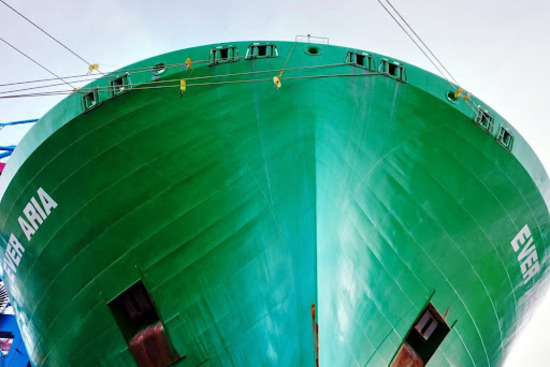
Photo by Pix Tresa on Unsplash
Sophocles Zoullas, Founder, Chairman, and Chief Executive Officer of Zenith Shipping, has spent more than three decades raising and deploying capital across public and private markets.
Over his career, Zoullas has raised more than $600 million in the public markets through an IPO, primary and secondary offerings, bought deals, and at-the-market programs. He has raised more than $500 million in equity from private institutional investors and secured more than $2 billion in bank financing.
That record gives him a practical sense of how capital behaves across shipping cycles and what investors expect in return.
Matching the Capital Structure to the Market
Zoullas sees public and private markets as having different strengths. Public markets offer scale, liquidity, and access to long-duration capital. Private markets offer discretion, speed, and the ability to carry out cycle-timed strategies without signaling intentions to competitors.
As he sees it, the best outcomes come from fitting the capital structure to market conditions, which means raising equity into strength, deploying debt into weakness, and staying flexible across both. Getting that sequence right takes judgment developed over multiple cycles.
“Shipping is one of the few industries where public equity, private equity, and structured credit intersect,” he says. “The winners are the ones who know how to use every part of the capital stack, at exactly the right moment.”
Bank markets come with their own expectations. Lenders want transparent systems and disciplined operations, something Zoullas learned early. In the late 1990s, while serving as an executive officer and director of Norland Shipping & Trading Corporation, he adopted the International Safety Management (ISM) Code ahead of much of the industry, anticipating that institutional capital, lenders, and global charterers would come to expect that standard.
Taking Eagle Bulk Public
Zoullas built his public-market experience at Eagle Bulk Shipping, which he founded in 2005 and led as Chairman and CEO until 2015. Zoullas had long expected traditional shipping and institutional capital to come together, and he saw aligned interests and transparency as the foundation for that partnership. Within eight months of Eagle Bulk’s formation, he took the company public on Nasdaq, in one of the earliest and most successful U.S. shipping IPOs of the modern era.
Under his leadership, Eagle Bulk grew to a 45-vessel fleet and became one of the world’s most significant owners of Supramax dry bulk vessels. In 2009, Fortune Small Business included the company in its ranking of the 100 Fastest-Growing Small Public Companies in America.
As the fleet expanded, Zoullas built relationships across global shipbuilding, chartering, banking, and capital markets. He also introduced one of the industry’s first fleet-wide charter-default insurance programs, which gave lenders and shareholders added protection against counterparty risk.
Private Capital at Delphin and Zenith
His private-market work has moved at a different pace. As founding principal of Delphin Shipping, Zoullas built a fleet of new Ultramax and Supramax bulk carriers and was an early adopter of fuel-efficient vessel design.
Working with leading shipyards and classification societies, he oversaw a program that included the first fuel-saving bulk carrier delivered in China and produced what became the world’s first fleet composed entirely of eco-design vessels. He saw a commercial case next to the environmental one, because a more economical ship is also a cleaner ship, and that case matters to the investors and lenders financing the fleet. Building it took long-term capital partnerships and disciplined underwriting.
At Zenith Shipping, which he founded in 2015, Zoullas deployed significant capital during the 2015 to 2017 shipping downturn, buying assets at depressed valuations and assembling a diversified private fleet across crude tankers, product tankers, and dry bulk vessels.
Private ownership allowed him to negotiate effectively and grow the fleet without signaling his intentions to the market, a dynamic captured in a TradeWinds profile titled “Being a private shipowner means no one sees me coming.”
He has bought ships in strong markets and weak ones. As he describes it, the test is whether the deal and the cash flow justify the acquisition, regardless of where the market stands.
What Sophocles Zoullas Brings to Institutional Partners
For sovereign wealth funds, private credit allocators, and other institutional investors, the Zenith Shipping founder describes the core of the job as aligning investor expectations with what the market can deliver. He divides his approach into four parts:
- Covenant discipline: structuring deals with conservative leverage, strong coverage ratios, and transparent reporting.
- Counterparty strength: relationships across shipyards, charterers, banks, and insurers that reduce operational and financial risk.
- Cycle-aware execution: only deploying capital when asset values and cash flows justify investment.
- Alignment: matching capital structure and asset strategy to investor expectations and market conditions.
That approach rests on more than twenty years of relationships with private equity firms, banks, credit funds, and family offices that have invested alongside him across multiple cycles.
“Capital markets reward operators who allocate with discipline and communicate with clarity,” Zoullas says. “If you respect the cycle, the cycle will pay you back.”
That principle has guided him through public listings, private platforms, and bank markets. Today, Sophocles Zoullas continues to lead Zenith Shipping from Florida and New York, bringing that discipline to every acquisition and financing decision.