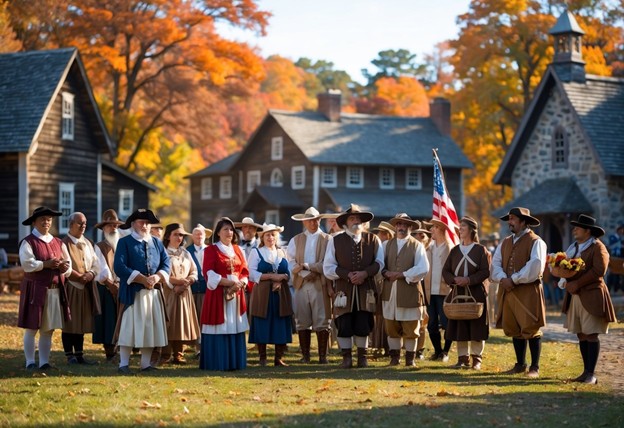
Forefathers’ Day is one of the earliest commemorative holidays in the United States, but it’s relatively unknown to most Americans today.
Established long before Independence Day, this observance honors the Pilgrims’ landing at Plymouth in 1620 and the foundational values they brought with them, like faith, perseverance, and the pursuit of self-governance. While it may not have the widespread recognition of other national holidays, Forefathers’ Day serves as an important reminder of how the country’s earliest settlers helped shape the social and cultural framework of early America.
The holiday’s tone has always been one of gratitude and reflection. In modern times, people who recognize it often do so through community events, educational programs, or family gatherings that celebrate early colonial history. Some observers even mark the occasion with symbolic gestures, such as attending local ceremonies or wearing patriotic shirts that represent respect for American heritage.
To understand the importance of this observance, it helps to trace its origins, traditions, and continued relevance.
When Did Forefathers’ Day Originate?
Forefathers’ Day originated in Plymouth, Massachusetts, in 1769, when a group of descendants of the original Pilgrims decided to formally commemorate the date of their ancestors’ arrival in the New World. These men, members of the Old Colony Club, saw the holiday as a way to honor the courage and faith of those who crossed the Atlantic aboard the Mayflower nearly 150 years earlier.
At the time, interest in colonial history was growing, and the idea of celebrating the Pilgrims’ journey fit neatly into broader cultural efforts to define an early American identity. The first recorded Forefathers’ Day celebration included a formal dinner, speeches, and a toast to the settlers’ perseverance. It was a local event, but one that connected the living descendants of the Pilgrims with the ideals of their ancestors and reinforced a sense of historical continuity.
When Is Forefathers’ Day?
Determining when to celebrate Forefathers’ Day was surprisingly complicated. The confusion stemmed from the 1752 shift from the Julian calendar to the Gregorian calendar, which changed the recognized date of the Pilgrims’ landing.
The original date, December 11, was changed to December 21 under the new system. For years, communities debated which day was correct, and both dates appeared in various records and announcements.
Early observances typically involved public gatherings, sermons, and elaborate meals featuring traditional New England dishes. Dinners often included fish, succotash, baked beans, and puddings, all of which are foods similar to what the early settlers might have eaten. The events were as much social as they were commemorative, providing an opportunity for speeches that reflected on faith, civic responsibility, and the endurance of the early colonists.
By the late 18th and early 19th centuries, Forefathers’ Day had become an annual tradition in Plymouth and surrounding communities. It served as a reminder of the Pilgrims themselves and of the ideals of liberty and gratitude that continued to influence American civic life.
How Did Forefathers’ Day Shape the American Identity?
As Forefathers’ Day celebrations grew, they began to take on broader national significance. The holiday offered a framework for exploring themes that would later define American political and cultural identity, such as individual freedom, moral responsibility, and the pursuit of self-determination.
Public figures often used the occasion to deliver speeches linking the Pilgrims’ example to the principles of democracy and independence. One of the most notable examples came from statesman Daniel Webster, who delivered a famous address at a Forefathers’ Day celebration in 1820. His remarks emphasized the connection between the Pilgrims’ commitment to faith and the emerging ideals of American democracy.
Through events like these, Forefathers’ Day helped establish the narrative of the Pilgrims as moral and civic pioneers. The holiday’s influence extended beyond Massachusetts, shaping how early Americans understood their national story. It reinforced the idea that the courage and cooperation shown by the settlers represented values that the growing nation should continue to uphold.
Modern Observances and Cultural Relevance
Today, Forefathers’ Day is primarily celebrated in Plymouth, Massachusetts, where local organizations, churches, and historical societies maintain the tradition. The holiday typically falls on December 21, accompanied by annual events that include public lectures, reenactments, and commemorations at the Pilgrim Monument and other historical sites.
While it no longer holds national prominence, Forefathers’ Day continues to offer meaningful reflection for those interested in American history. It connects communities to the story of the early settlers, reminding participants of the challenges the Pilgrims faced in building a new society. For educators and historians, it offers a valuable opportunity to explore the complexity of the colonial experience, encompassing both its successes and its enduring impact on indigenous peoples and subsequent generations.
The Legacy That Shaped a Nation
Forefathers’ Day is a living reminder of the ideas and determination that helped define the earliest stages of American identity. It celebrates gratitude, courage, and the enduring importance of community.