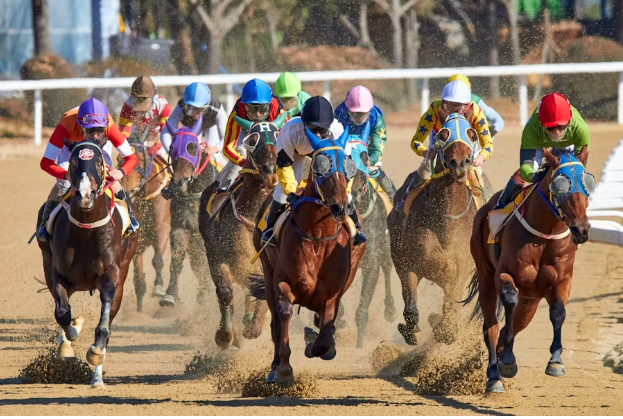
Spring in Arcadia carries a different kind of electricity. The San Gabriel Mountains rise behind a buzzing grandstand as three-year-olds with Derby dreams step onto the Santa Anita dirt.
The Santa Anita Derby is more than another stop on the calendar. It is the West Coast’s defining Kentucky Derby prep, awarding 100 points to the winner and often reshaping the national conversation overnight.
For bettors, it offers something even more compelling: clear trends, track tendencies, and high stakes. Handicapping it well means understanding both the surface and the bigger picture leading up to the First Saturday in May.
Understanding the Santa Anita Bias Before You Bet
Santa Anita’s dirt has a personality. Ignoring it is like overlooking the wind at Del Mar or the long Churchill Downs stretch. Successful handicapping begins with understanding how this surface typically plays.
Speed has long defined racing in Arcadia. Front-runners and pace-pressers frequently control the tempo in two-turn dirt routes, including the 1 1/8-mile Santa Anita Derby. Horses that establish position early often dictate the outcome.
Profiles that consistently succeed at Santa Anita include:
- Horses sitting within one to three lengths of the lead,
- Proven stamina at a mile and beyond,
- Clean breaks from the gate,
- Prior experience on the Santa Anita dirt.
Favorites thrive under these conditions, winning routes consistently and hitting the board even more often. The short run to the first turn makes inside and mid-post draws, especially gates two through five, ideal for saving ground and securing position.
Before placing wagers, many bettors review recent surface trends, past Arcadia results, and track-specific data tied to Santa Anita Derby betting to see how the dirt has been playing. Early races on the card often confirm whether speed is still dominant or closers are gaining ground.
Letting the Derby Points Shape Your Handicapping
Every Santa Anita Derby unfolds under the weight of the points system. The winner earns 100 points toward the Kentucky Derby, while second place receives 50. That difference alone can redefine how the race is ridden.
A victory guarantees a starting spot at Churchill Downs, and a runner-up finish usually does the same. Trainers and jockeys understand those stakes clearly, and their decisions often reflect the bigger goal of securing a place in Louisville rather than simply chasing headlines.
Some horses enter the gate needing only a steady performance to punch their ticket. Others must deliver a breakout effort or risk falling short of the Derby field. That urgency can influence the early tempo and shape the pace in subtle but important ways.
A colt safely on the leaderboard may be ridden patiently, saving his best for May. A bubble contender might press early to avoid traffic and uncertainty. The Santa Anita Derby is never run in isolation; every move carries implications for Churchill Downs.
Trainer Patterns and Jockey Decisions That Can Tilt the Race
Santa Anita in spring often feels like familiar territory for certain barns. Trainer intent and rider chemistry add another layer to handicapping.
The Baffert Effect
Few names are more closely tied to West Coast Derby preps than Bob Baffert. His runners frequently set or stalk the pace, bringing class and early speed into the equation. Public confidence tends to follow, shaping odds and influencing exotic structures.
Horses from established Derby-focused barns often display sharp workouts in the weeks leading up to the race. Bullet drills at five furlongs signal readiness. Consistent, steady works hint at foundation and stamina.
Local Conditioning and Rider Expertise
Michael McCarthy and Richard Mandella have long enjoyed success at Santa Anita. Locally based horses grow comfortable with the surface and turns, often delivering smoother, more confident performances under pressure.
Jockeys such as Umberto Rispoli and Antonio Fresu know that positioning before the first bend is critical. That early move often decides whether a horse travels comfortably or chases, making proven trainer–rider pairings key when building tickets.
Projecting Santa Anita Form Toward Churchill Downs
A strong Santa Anita Derby performance can launch a colt into national prominence. Translating that form to Kentucky is another challenge entirely.
The Two-Prep Pattern
Modern Derby contenders often follow a streamlined path: a February or March prep like the San Felipe Stakes, then the Santa Anita Derby. That two-race foundation keeps them fresh while providing meaningful seasoning.
The progression from 1 1/16 miles to 1 1/8 miles also serves as a test of stamina. Observant bettors watch gallop-outs closely. A horse finishing strongly past the wire often signals readiness for the 1 1/4-mile Kentucky Derby distance.
The Closer’s Trap
Santa Anita typically features compact fields of five to eight horses. Churchill Downs brings a cavalry charge of up to twenty. Traffic, kickback, and jostling become part of the equation.
Deep closers who excel in smaller California fields can struggle in Louisville traffic. Stalkers sitting two to four lengths off the lead often adapt better to the Derby’s chaos. How a horse earned its Santa Anita finish matters as much as the result itself.
Constructing Wagers for the Santa Anita Derby
Clear trends allow for thoughtful ticket construction. Speed-oriented favorites often anchor the top of the board. That consistency makes them logical starting points.
Win bets can make sense when a tactical speed horse appears poised to control the race. Exacta and trifecta structures often build around that type of runner.
Consider the following betting approaches:
- Keying a pace-forward favorite in the top slot,
- Pairing with an improving stalker underneath,
- Adding a late-running contender for third.
Monitoring track conditions remains essential. A fast surface can amplify early speed. A sealed or wet track sometimes strengthens that tendency even further. Early races on the card often reveal the day’s pattern.
Santa Anita rewards clarity. When pace scenarios and trainer intent align, the wagering puzzle becomes more manageable.
From Arcadia to the First Saturday in May
The Santa Anita Derby sits at the crossroads of ambition and opportunity. A commanding win can elevate a colt to national prominence, while a gritty runner-up effort may still secure a Derby berth and build momentum.
Not every Arcadia winner will wear roses in Louisville. Flashy blowouts can flatten weeks later, while efficient, composed victories often carry forward more reliably to Churchill Downs.
For bettors, this race offers more than one afternoon of action. It reveals how West Coast speed, stamina, and strategy might hold up on racing’s biggest stage.