Choosing hospital furniture is rarely as simple as comparing specifications on a catalogue. A hospital bed, emergency stretcher or medical cart becomes part of a clinical workflow that may run around the clock. It needs to work for the patient, the healthcare professional using it and the facility responsible for maintaining it over many years.
This is why modern healthcare facilities increasingly look beyond individual products and evaluate medical equipment as part of a wider care environment. Comfort matters, but so do mobility, hygiene, ergonomics, durability and the ability to adapt equipment to different departments.
Based in Türkiye and serving international healthcare markets, Optium Healthcare develops hospital furniture and medical equipment for general wards, intensive care units, emergency departments, treatment areas and other clinical environments.
Hospital Beds Designed Around Clinical Needs
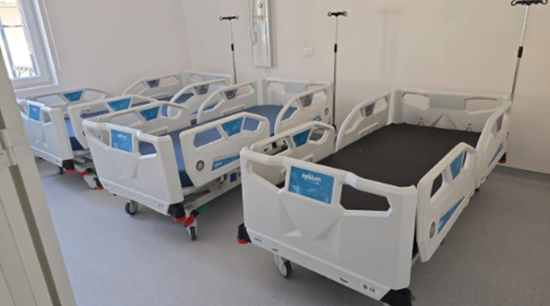
Hospital beds are among the most frequently used pieces of equipment in any healthcare facility. Their design can affect patient positioning, nursing procedures, transportation and the amount of physical effort required from clinical staff.
Different departments naturally require different solutions. A bed designed for a standard patient room does not need to perform exactly the same functions as an electronic ICU bed used in a high-acuity environment.
Optium’s hospital bed portfolio includes electronic and manual models as well as solutions developed for intensive care and other specialized departments. Its Collesium series, for example, is designed for use across different levels of patient care, while electronic ICU configurations provide additional positioning and adjustment capabilities.
The objective is straightforward: give healthcare professionals practical control over positioning while creating a stable and comfortable environment for the patient.
Emergency Stretchers and Patient Transport
Patient transportation is another area where design choices have an immediate practical impact.
Emergency stretchers may be moved through crowded corridors, elevators, emergency departments and diagnostic areas many times during a working day. Maneuverability, accessibility and secure patient positioning therefore matter just as much as the basic structure of the stretcher.
Optium’s Emergeum emergency stretcher range focuses on supporting patient transport while reducing unnecessary physical strain on clinicians. This type of equipment is particularly important in emergency departments, where staff often need to move quickly without compromising control or patient comfort.
A well-designed stretcher should not complicate the workflow. It should become an almost invisible part of it.
Medical Carts That Adapt to the Department
Medical carts are easy to overlook when planning a healthcare environment, yet they are used constantly.
Medication, instruments and emergency supplies need to be organized so that healthcare professionals can access what they need without wasting time. The requirements of a general treatment cart may also differ considerably from those of a crash cart prepared for emergency response.
Flexible drawer layouts and configurable accessories make it possible to adapt medical carts to the workflow of individual departments rather than forcing every clinical team to work with the same configuration.
Optium’s Unicart range follows this approach, offering configurable drawer and accessory options for different clinical requirements.

Supporting Long Treatment Sessions
Not every medical furniture product is designed around emergency care or short procedures.
Dialysis and chemotherapy patients, for example, may remain seated for extended treatment sessions. In these settings, adjustability and patient support become especially important.
The Optium DC 44 electrical dialysis and chemotherapy chair uses four motors to provide multiple adjustment possibilities. This allows the chair to accommodate different positioning requirements during treatment while giving healthcare staff greater flexibility when assisting patients.
This illustrates a broader trend in hospital furniture: products are increasingly being designed around the specific environment in which they will actually be used rather than around a generic definition of medical furniture.
Equipment for Specialized Clinical Areas
Modern hospitals contain many different environments under one roof. Intensive care, emergency medicine, obstetrics, dialysis and outpatient examination rooms all have their own workflows.
As a result, specialized equipment has become an essential part of hospital planning.
Alongside hospital beds and stretchers, Optium Healthcare offers electronic delivery beds, gynecology couches, examination couches, dialysis and chemotherapy chairs, crash carts, medical carts, cabinets, tables and other hospital furniture solutions.
This gives healthcare facilities the ability to plan equipment around individual departments while maintaining a more consistent approach to product design and support.
Hygiene, Durability and Daily Use
Medical furniture is exposed to conditions that ordinary furniture simply does not face.
Beds, carts and treatment chairs may be used continuously, moved frequently and cleaned repeatedly. Materials and surfaces therefore need to be selected with long-term clinical use in mind.
Ease of cleaning is particularly important because complex shapes, unnecessary joints and difficult-to-reach areas can make routine hygiene procedures more time-consuming.
Durability is equally relevant from a financial perspective. The purchase price of a hospital bed or medical cart is only one part of its total cost. Maintenance requirements, replacement frequency and service availability can all influence the long-term value of the equipment.
For healthcare facilities managing hundreds or thousands of pieces of equipment, small differences in reliability can become significant over time.
Customization Is Becoming More Important
Healthcare facilities do not all operate in the same way.
Hospital size, department structure, patient profile, available space and internal procedures can vary considerably between projects. A standardized product can work well in one facility and create unnecessary limitations in another.
For this reason, customization has become an increasingly important part of medical furniture procurement.
Beds, chairs and carts can be configured according to clinical requirements, available space and workflow preferences. This is particularly useful for hospitals developing new departments or replacing older equipment while trying to improve existing processes.
From Product Supply to Long-Term Support
Another factor that should not be ignored is what happens after the equipment arrives.
Installation, staff training, maintenance and technical support can influence the practical experience of using medical equipment just as much as its original specification.
Optium provides support beyond product delivery, including installation, training, maintenance and project-related services. For hospitals and medical equipment distributors working across multiple projects, having access to both a broad product portfolio and ongoing support can simplify procurement and long-term equipment management.
A More Practical Approach to Hospital Furniture
The best hospital furniture does not need to attract attention. It needs to perform consistently.
A bed should help caregivers position and assist a patient. A stretcher should move predictably through a hospital. A crash cart should keep critical supplies organized and accessible. A dialysis chair should remain comfortable and adjustable during long treatment sessions.
When those requirements are considered from the beginning, medical furniture becomes more than a collection of individual products. It becomes part of the infrastructure that supports everyday patient care.
For healthcare facilities planning new projects or upgrading existing departments, evaluating hospital furniture through the combined lenses of clinical functionality, ergonomics, hygiene, durability and service support can lead to better long-term decisions.