When it comes to industrial crane systems, the integrity of your rail installation is only as strong as the components holding it together. Crane rail fixing clips are among the most critical — yet often overlooked — elements in any overhead or gantry crane system. Whether you manage a busy port terminal, a steel mill, a shipyard, or a coal mining facility, understanding how these small but mighty components work can mean the difference between smooth operations and costly downtime.
At Suzhou Xingrail Rail, we have built our reputation on designing, manufacturing, and supplying high-performance crane rail fixing clips and complete rail fastening systems for industries across the globe. This comprehensive guide covers everything you need to know about crane rail fixing clips — from how they work to how to choose, install, and maintain them.
What Are Crane Rail Fixing Clips?
Crane rail fixing clips are mechanical fastening devices used to secure crane rails firmly to their supporting structures — typically steel beams, concrete foundations, or crane runways. They prevent lateral movement, vertical uplift, and longitudinal displacement of the rail under the dynamic forces generated by crane travel and load handling.
Without properly functioning rail clips, a crane rail can shift out of alignment, creating dangerous conditions for operators, damaging the crane’s wheels and bridge structure, and ultimately leading to catastrophic system failure. In high-cycle environments like ports, shipyards, and metallurgical plants, even minor rail misalignment can accelerate wear across the entire system.
Crane rail fixing clips are typically installed at regular intervals along the full length of the rail, with spacing determined by the crane’s rated load, travel speed, and the rail profile being used.
How Do Crane Rail Fixing Clips Work?
The fundamental principle behind crane rail fixing clips is simple: they grip the base flange of the crane rail and anchor it to the supporting structure using mechanical force. However, the engineering behind each clip type is far more nuanced.
A well-designed clip must:
- Resist vertical uplift caused by eccentric loading or rail deflection
- Control lateral spreading as the crane travels and turns
- Allow for thermal expansion without buckling the rail
- Absorb vibration and dynamic loads to protect both the crane and the supporting structure
- Maintain consistent clamping force over years of heavy-cycle operation
Modern crane rail fixing clips achieve this through carefully calculated geometry, high-tensile bolt connections, and in many cases, elastomeric pads that cushion the rail-to-beam interface.
Types of Crane Rail Fixing Clips
Choosing the right type of fixing clip is essential. At Xingrail, we supply a wide range of clip configurations to match every application and rail profile.
1. Bolt-On Crane Rail Clips
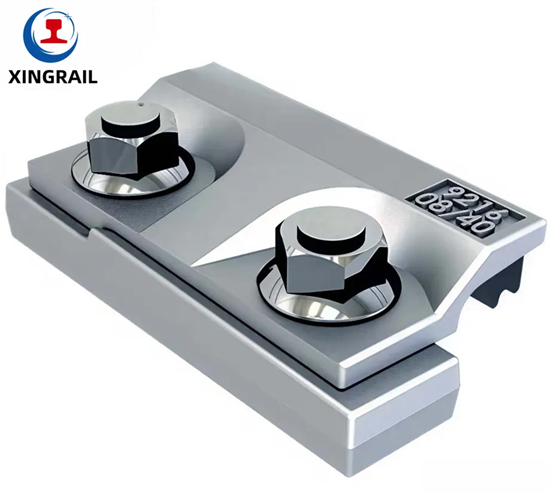
Bolt-on clips are the most commonly used type in general industrial crane applications. They are fastened to the supporting beam flange using high-strength bolts and nuts, clamping down on the rail’s base flange from either side or from one side with a lateral restraint element.
Key advantages:
- Easy to install and remove for maintenance or rail replacement
- Adjustable to fine-tune lateral positioning
- Reusable if undamaged
- Compatible with a wide range of rail profiles
Ideal for: Warehouses, manufacturing facilities, port terminals, and any environment where periodic rail inspection and replacement is anticipated.
Welded clips are permanently fixed to the rail’s supporting flange through weld connections, offering maximum rigidity under extreme loads. These are common in heavy metallurgical and steelworks environments where crane loads are exceptionally high and rail stability is paramount.
Key advantages:
- Maximum lateral and vertical restraint
- No risk of bolt loosening under vibration
- Suitable for very heavy-duty cranes
Key considerations: Welded clips are not reusable and require cutting to remove. Rail replacement requires full welding operations, which demands skilled labor and increases downtime.
Ideal for: Steelworks, large shipbuilding berths, and applications with extremely heavy crane loads.
3. Elastic Crane Rail Clips
Elastic or spring-type clips function similarly to railway track elastic fasteners. They apply a continuous spring force to the rail flange, accommodating thermal movement while maintaining firm lateral and vertical restraint. These clips are increasingly popular for their ability to reduce noise, vibration, and rail creep.
Key advantages:
- Accommodates thermal expansion naturally
- Reduces noise and vibration transmission to the structure
- No bolt loosening over time due to spring action
- Longer service life in high-cycle applications
Ideal for: Ports, shipyards, and facilities where noise and vibration control are important operational requirements.
How to Choose the Right Crane Rail Fixing Clips
Selecting the correct crane rail fixing clips for your application requires a systematic approach. Rushing this decision leads to premature failure, increased maintenance costs, and safety risks. Here are the key factors to evaluate:
Crane Type and Load Rating
The weight and dynamic loading of your crane directly determine the clamping force required from your rail clips. Overhead travelling cranes, gantry cranes, jib cranes, and underslung cranes each impose different force profiles on the rail. Always consult the crane manufacturer’s specifications and structural calculations when selecting clips.
Rail Profile
Crane rails come in a variety of profiles — including A-series, KP-series, QU-series, and DIN standards — each with different base widths and head heights. Your fixing clips must be dimensionally compatible with the specific rail profile installed. Attempting to use clips designed for one rail type on another can result in inadequate clamping or complete failure.
Environmental Conditions
Operating environment significantly influences material and coating selection:
- Indoor, dry environments: Standard high-strength steel clips with a basic paint or primer coating are usually sufficient.
- Outdoor or humid environments: Hot-dip galvanized or zinc-plated clips provide corrosion resistance.
- Marine and coastal environments: Stainless steel or special coated clips are recommended due to salt spray exposure.
- High-temperature environments (steelworks, foundries): Clips must be rated for elevated temperature performance without losing tensile strength.
Thermal Movement Requirements
Long crane runway installations experience significant thermal expansion and contraction. If your clips do not allow for controlled longitudinal movement, rail buckling or anchor bolt shearing can occur. Elastic clips and slotted-hole bolt patterns are common solutions for thermal management.
Maintenance Access and Replacement Frequency
If your operation requires frequent rail inspections or periodic rail replacements, bolt-on clips are far more practical than welded designs. Consider the total lifecycle cost, not just the initial purchase price.
Installation Best Practices for Crane Rail Fixing Clips
Proper installation is just as important as proper clip selection. Incorrectly installed clips — even high-quality ones — will fail prematurely or provide inadequate restraint. Follow these best practices:
1. Prepare the bearing surface. Ensure the top flange of the supporting beam is clean, flat, and free from mill scale, paint buildup, or debris. Uneven surfaces create uneven clamping and can deform clip geometry over time.
2. Use rail pads where appropriate. Elastomeric rail pads placed between the rail base and the beam flange distribute load more evenly, reduce vibration, and protect both the rail and beam from wear.
3. Align the rail precisely before tightening. Rail alignment — both lateral and in the vertical plane — must be verified with precision instruments before clips are torqued down. Attempting to force a misaligned rail into position using clip bolts damages the clips and the rail.
4. Torque bolts to specification. Always use a calibrated torque wrench and tighten to the manufacturer’s specified torque values. Under-tightening allows movement; over-tightening can strip threads or crack clip bodies.
5. Install at correct intervals. Follow the engineering specification for clip spacing. Increasing spacing to reduce costs is a false economy that significantly reduces rail stability.
6. Verify installation after initial crane operation. After the first loaded crane passes, re-inspect clip positions and bolt torque. Initial bedding-in of the rail can cause slight movement.
Maintenance and Inspection of Crane Rail Fixing Clips
A proactive maintenance program for your crane rail fixing clips extends service life, prevents unexpected failures, and keeps your crane system operating safely. Recommended practices include:
- Monthly visual inspections for obvious deformation, cracking, or corrosion
- Quarterly bolt torque checks, re-tightening any that have loosened
- Annual detailed inspections using measurement tools to verify rail alignment and clip geometry
- Immediate replacement of any clip showing cracks, permanent deformation, or severe corrosion
- Protective coating reapplication for outdoor clips as needed, particularly in coastal or chemically aggressive environments
Keeping detailed maintenance records allows you to identify patterns — such as specific zones where clips consistently loosen — that may indicate broader issues with the rail system design or crane loading.
Industries We Serve with Crane Rail Fixing Clips
At Suzhou Xingrail Rail FastenTech Co., Ltd, our crane rail fixing clips and complete rail fastening systems serve a diverse range of demanding industries worldwide:
- Railways — Track fastening systems for mainline and urban rail networks
- Ports and Shipping Terminals — Container crane and ship-to-shore crane rail systems
- Shipbuilding — Gantry crane and travelling crane installations in drydocks and assembly halls
- Coal Mining — Robust rail fastening in underground and surface mining environments
- Power Generation — Coal handling, turbine hall, and maintenance crane systems
- Metallurgy — Heavy ladle cranes, charging cranes, and rolling mill crane rail systems
Each industry presents unique challenges — from salt spray in port environments to intense heat in metallurgical plants — and our engineering team works closely with clients to specify the right crane rail fixing clip solution for every condition.
Why Choose Xingrail for Crane Rail Fixing Clips?
With advanced manufacturing equipment, rigorous quality control, and a deep understanding of global rail standards, Suzhou Xingrail Rail FastenTech Co., Ltd delivers crane rail fixing clips that perform reliably across the harshest industrial environments. Our solutions are backed by technical expertise, responsive customer support, and a commitment to long-term partnership with every client we serve.
Whether you need standard bolt-on clips for a new warehouse crane installation or a fully engineered fastening system for a major port expansion, our team is ready to help.
Contact us today — drop us a message and let’s connect. You will receive a reply within 24 hours. We respect your privacy — no spam, no worries.