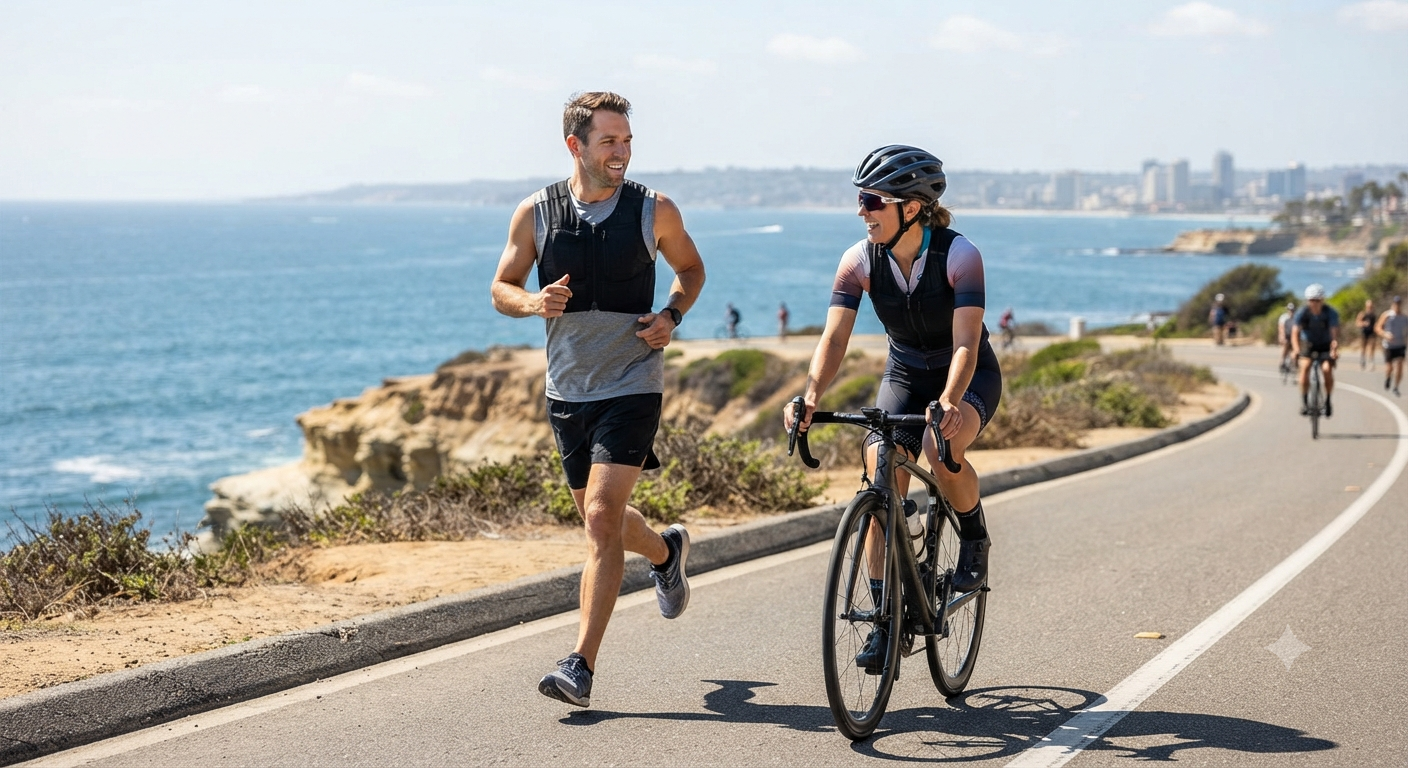
Few cities attract outdoor athletes quite like San Diego. Mild winters, scenic coastal roads, challenging canyon trails, and countless cycling routes make it easy to stay active throughout the year. It is no surprise that thousands of runners and cyclists head outside almost every day, whether preparing for a race or simply enjoying an evening workout.
The same sunshine that makes San Diego so appealing can also become a serious obstacle. Even on days that do not feel particularly hot, hours of direct sunlight combined with physical effort can cause body temperature to climb much faster than expected. That growing awareness has led many local athletes to rethink how they prepare for training. One solution that has become increasingly common is the use of a cooling vest.
Training in San Diego Means Training in the Heat
Morning workouts are popular across the city for a reason. Temperatures are usually lower, traffic is lighter, and the air feels fresher. By late morning and early afternoon, conditions can change quickly, especially away from the coastline.
Cyclists climbing the hills around Mount Soledad or runners tackling longer routes through Mission Trails Regional Park often notice that the heat becomes just as challenging as the distance itself. As the body works harder to stay cool, sweating increases and the heart has to work overtime. Energy that could be used for performance is instead spent regulating temperature.
For anyone following a structured training schedule, this creates an extra challenge. Missing workouts because of excessive heat or finishing sessions completely drained makes it harder to stay consistent over time.
More Than Just Staying Comfortable
Cooling vests are often associated with comfort, but experienced athletes tend to look beyond that. Feeling cooler is certainly pleasant, yet the real advantage lies in reducing heat stress before it starts affecting performance.
Starting a run or ride with a lower body temperature gives the body more room to handle rising heat during exercise. Instead of fighting high temperatures from the very beginning, the cooling process starts with an advantage.
That difference becomes noticeable during longer sessions. Legs stay fresher, concentration lasts longer, and maintaining a steady pace often feels less demanding.
Many endurance athletes now see cooling as another piece of their preparation, much like choosing the right shoes, nutrition, or hydration strategy.
Recovery Starts Immediately After Exercise
Training does not end when the stopwatch stops.
Body temperature often remains elevated long after a workout has finished. On warmer days that lingering heat can leave athletes feeling sluggish for hours. Cooling down efficiently helps the body begin recovering sooner, allowing muscles and the cardiovascular system to return to normal more quickly.
This is one reason cooling products have become popular not only before exercise but afterward as well. Many runners put on a cooling vest after crossing the finish line, while cyclists often use one after long weekend rides before driving home.
Small habits like these may not seem dramatic on a single day, but they can make a noticeable difference over weeks and months of consistent training.
Heat Affects Every Athlete Differently
No two athletes respond to heat in exactly the same way.
Some begin feeling uncomfortable after only a few miles, while others can tolerate warm conditions much longer. Age, fitness level, hydration, sleep quality, and previous heat exposure all influence how the body reacts.
Because of these differences, many runners and cyclists are becoming more proactive instead of simply hoping to adapt.
Rather than cutting sessions short or avoiding outdoor exercise altogether, they look for practical ways to stay cooler while continuing to train safely.
A Growing Focus on Smarter Training
Sports science has changed the way endurance athletes approach performance. Years ago, success was often linked to pushing harder than everyone else. Today the emphasis is much more balanced.
Recovery, nutrition, sleep, hydration, and temperature management all receive attention because they directly influence long term progress.
That shift explains why cooling technology is no longer limited to elite competitors. Recreational runners preparing for a first marathon and cyclists building endurance for charity rides are adopting many of the same habits used by professionals.
The goal is not necessarily to ride faster every single day. The goal is to train consistently without unnecessary setbacks caused by excessive heat.
Why Inuteq Continues to Stand Out
As interest in personal cooling continues to grow, athletes have more options than ever before. Not every cooling product offers the same combination of comfort, durability, and performance.
Inuteq has built a strong reputation by developing cooling solutions that fit naturally into active lifestyles. Designed for demanding environments, the products are used by athletes, outdoor professionals, and anyone who spends long periods in warm conditions.
The lightweight design makes them practical for regular training without adding unnecessary bulk or restricting movement.
Looking Ahead
San Diego will always be one of the most attractive places in the country for running and cycling. Beautiful scenery and year round opportunities encourage people to stay active, but the climate also demands respect.
Ignoring heat can turn an enjoyable workout into an exhausting experience. Managing body temperature before it becomes a problem allows athletes to stay focused on the miles ahead instead of the discomfort that rising temperatures can create.
That practical approach explains why cooling vests are becoming a familiar sight on San Diego’s roads, bike paths, and running trails. They are no longer viewed as something reserved for elite competitors. Instead, they have become another useful tool for athletes who want to keep training comfortably, recover more effectively, and make the most of every workout, regardless of how warm the California sun becomes.