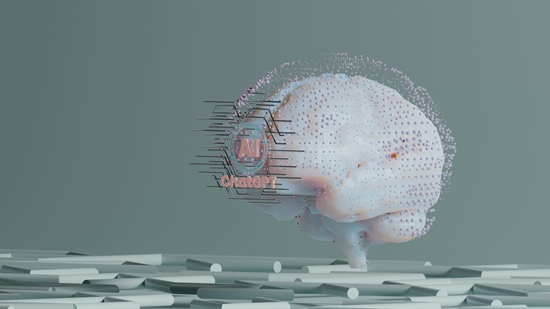
One of the clearest patterns at HumanX 2026 is the fading line between AI as a showcase technology and AI as a deployed system. In San Francisco, the companies making the strongest impression are not only talking about what their tools can do. They are showing how those tools fit into real business and institutional workflows.
That practical emphasis matters because the AI market is maturing. Novelty still draws attention, but operational value is becoming the more durable standard. Companies now need to prove they can improve revenue execution, support infrastructure demands, automate without introducing chaos, and strengthen trust in environments where synthetic content is becoming easier to generate.
The San Francisco Tribune identified 11 startups that best capture this transition. Some are deep in the infrastructure stack, while others are closer to the user or to the institution. Together, they reveal how AI is moving from impressive demonstration to actual deployment.
The Companies Closest to Immediate Execution
Alta fits this moment well because it is built around action. Its unified AI system for go-to-market execution brings together more than 50 data sources, including CRM systems, intent signals, job postings, and product usage. That intelligence helps teams identify the right prospects and engage them at the right time. Alta also supports orchestration across email, LinkedIn, SMS, WhatsApp, and calls, with AI agents that adapt based on trigger events and engagement patterns. The result is a system designed to strengthen outbound generation, qualify inbound leads quickly, reduce missed meetings, and reopen deals that have already stalled.
Baseten is compelling because it addresses a hard production problem. The company is focused on inference, providing a platform purpose-built for deploying and scaling machine learning models in production. It supports open-source, fine-tuned, and custom models with optimized runtimes, cross-cloud availability, and flexible deployment options that include self-hosted environments. That positioning reflects a simple reality. A model has limited value if it cannot run reliably where people need it.
Binti shows how impactful software can reshape a public-facing system. The company modernizes foster care and adoption workflows through tools built for agencies and social workers. Since its launch in 2017, Binti has helped more than 110,000 families get approved to foster or adopt and is used by over 12,000 social workers across 34 states. Agencies using the platform have seen a 30 percent increase in family approvals. It is one of the strongest examples at HumanX of technology improving process efficiency in a system where better execution can produce better human outcomes.
Companies Changing the Shape of Work
Yutori is developing autonomous agents for the web, built to handle digital tasks that users currently manage themselves. Its agents can help with grocery ordering, reservation management, and complex travel coordination, all pointing toward an internet where users increasingly delegate instead of click through each step on their own.
Crosby is reshaping legal execution by combining lawyer expertise with AI. Its model is aimed at helping fast-growing companies close deals more efficiently, which places it in a part of the market where speed and accuracy both matter. It reflects a broader shift toward agentic support in professional services.
Kognitos is making automation more accessible through plain language. With its English as Code paradigm, workflows are described in natural language and executed with deterministic precision. Its neurosymbolic architecture is designed to avoid hallucinations, while its Time Machine runtime supports pause, exception handling, and resumption. That makes it especially notable for complex enterprise processes.
Mithril is addressing compute access, which remains one of the most practical barriers in AI growth. Its platform aggregates GPUs, CPUs, and storage across cloud providers into a unified interface, making it easier for organizations to manage workloads and scale without inheriting unnecessary infrastructure complexity.
Systems Built Around Access, Information, and Trust
Kikoff is using AI-driven credit solutions to help consumers build credit histories, particularly those overlooked by traditional financial systems. It is a reminder that the operational AI story also includes financial inclusion.
Vectara is focused on search and retrieval, helping organizations build conversational AI systems grounded in enterprise data. As internal knowledge becomes more central to AI usefulness, that position becomes increasingly important.
Semafor is applying a structured, multi-perspective model to journalism. In a period shaped by distrust and fragmented information, its emphasis on verified facts and differing viewpoints gives it a distinct place in the HumanX field.
GetReal Security is dealing directly with the trust crisis attached to synthetic media. Its platform verifies digital content and helps organizations detect deepfakes and identity manipulation before those threats cause harm. In the AI era, proving authenticity is becoming as important as generating content.
The Direction HumanX Is Pointing Toward
The San Francisco Tribune’s HumanX selection shows that AI is entering a more demanding phase. It is not enough to be interesting. Systems now need to work under real conditions, fit into real processes, and earn real trust.
That is the common thread across these 11 startups. They are not just building AI products. They are building the conditions under which AI becomes dependable.