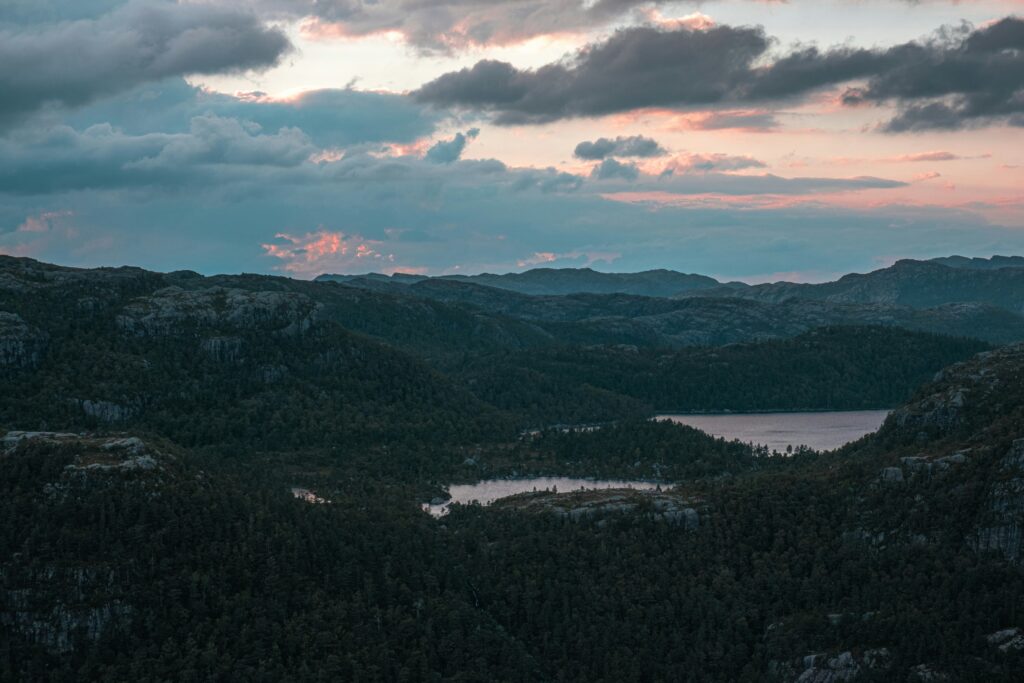
Norway’s landscape presents a distinct hiking experience that sets it apart from other European mountain destinations. The country’s extensive coastline, carved by glaciers over millennia, creates a hiking environment where mountains rise directly from the sea. This combination of elevation and water produces trail systems that offer constant views of fjords, islands, and ocean—a feature rarely found in landlocked mountain ranges.
The Fjord Formation Factor
Norwegian fjords are essentially deep valleys that were carved by glaciers during ice ages and later flooded by rising sea levels. Some fjords reach depths exceeding 1,300 meters below sea level, while adjacent peaks rise to similar heights above the water. This extreme vertical relief means hikers can experience significant elevation changes while never being far from water.
The presence of water at such depths affects the local climate. Fjords moderate temperature extremes, keeping coastal areas milder than inland regions at similar latitudes. This creates a longer hiking season along the coast compared to interior mountain areas, though weather remains variable and requires proper preparation regardless of season.
Trail Infrastructure and Mountain Lodges
The Norwegian Trekking Association, known locally as DNT, maintains an extensive network of marked trails and staffed mountain lodges throughout the country. This system differs from Alpine hut networks in several ways. Norwegian lodges tend to be more widely spaced, reflecting the country’s lower population density and larger wilderness areas. Many routes require longer daily distances between accommodations compared to more compact European ranges.
DNT lodges operate on a self-service model during certain periods, where hikers can access unstaffed facilities using a standard key available to members. This system allows for greater flexibility in timing and route planning. Staffed periods typically coincide with peak summer months and Easter, when full meal service and staffed support are available.
For those planning extended treks through Norwegian mountain terrain, Norway hiking tours provide structured routes between lodges, handling logistics while allowing hikers to move independently through the landscape. This approach works well for the Norwegian context, where distances between facilities and variable weather conditions benefit from advance planning.
Seasonal Considerations in Northern Latitudes
Norway’s position at high northern latitudes creates seasonal variations that significantly impact hiking conditions. Summer brings extended daylight hours, with some northern regions experiencing midnight sun where the sun never fully sets. This allows for flexible hiking schedules and the option to travel during cooler evening hours.
However, the same latitude that provides summer daylight also means limited winter light. The hiking season in most regions runs from June through September, with July and August offering the most stable conditions. Higher elevation routes may retain snow into July, while autumn arrives early at elevation, with September bringing fall colors but also increased precipitation and shorter days.
Navigation and Wilderness Skills
Norwegian trails often traverse remote terrain where services are limited. While main routes are marked with cairns or painted symbols, visibility can decrease rapidly in fog or rain. Weather systems from the Atlantic can move in quickly, bringing conditions that require proper navigation skills and equipment.
The concept of “allemannsretten” or “everyman’s right” allows public access to wilderness areas, but it also means fewer restrictions on where people can travel. This freedom comes with responsibility for self-sufficiency and environmental stewardship. Hikers should be prepared for emergency situations and understand that rescue response times can be lengthy in remote areas.
Regional Variations in Terrain
Norway’s hiking regions each offer distinct characteristics. The Jotunheimen range contains the country’s highest peaks and most glaciated terrain, attracting hikers seeking alpine conditions. The Lofoten Islands combine dramatic coastal peaks with fishing village culture. The Hardangervidda plateau offers vast, open highland terrain with gentle topography but exposure to weather.
The Romsdalseggen ridge has become increasingly popular for its dramatic exposure and views over the Romsdal valley. Meanwhile, the Preikestolen and Trolltunga formations draw large numbers of visitors for their striking cliff-edge viewpoints. Each region requires different preparation and offers different experiences, from technical scrambling to long-distance plateau crossings.
Practical Infrastructure Beyond the Trail
Norwegian hiking infrastructure extends beyond the trail system itself. Transportation networks including buses, trains, and ferries connect trailheads and facilitate point-to-point treks without requiring vehicle shuttles. Many hiking routes are designed with public transportation access in mind, though schedules can be limited outside peak season.
Supply points in mountain areas are less frequent than in more densely populated European regions. Hikers should plan food supplies carefully, as lodge meals may have limited options and village shops along routes may be small or have restricted hours. Water sources are generally abundant and safe to drink untreated in most mountain areas, though near agricultural land or settlements, filtration is advisable.